Ginger Science · Evergreen research explainer
Red hair is not a pain superpower
The genetics are interesting. The blanket claims need a lie-down.
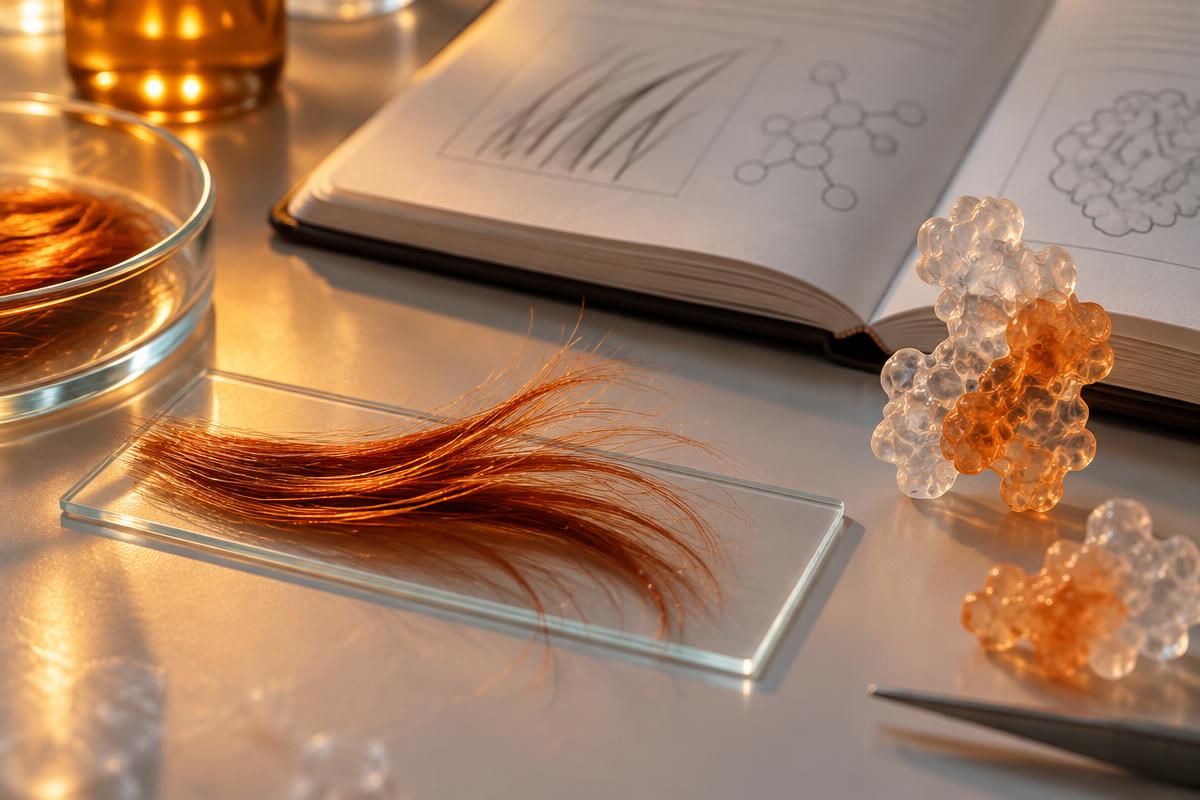
Apparently a head of copper hair comes with a complimentary medical degree. Someone sees a redhead and suddenly has a confident theory about pain, dentists and exactly what their body can tolerate. It is an impressive amount of information to extract from a fringe. Unfortunately, hair is doing rather less diagnostic work than the conversation suggests.
Start with the colour. MedlinePlus Genetics explains that MC1R helps regulate which pigments melanocytes make. Eumelanin contributes brown and black colouring; pheomelanin contributes yellow and red colouring. Some MC1R variants are associated with red hair, but pigmentation also involves other genes. That makes MC1R important without making every redhead genetically interchangeable. A hairstyle is a visible result, not a complete laboratory report.
The pain connection gets more interesting when researchers ask about mechanisms rather than personality. In an April 2021 study summarized by NIH, scientists investigated red-haired mice carrying an MC1R variant. The animals showed a higher pain threshold. Crossing them with an albino strain let researchers separate the effect of pigment itself from the cells and signalling involved in making it.
The higher threshold remained even when pigment synthesis was prevented. The explanation concerned altered signalling from melanocytes and the balance between pathways involved in increasing and inhibiting pain. That is more specific than “orange hair makes you tough.” It is also much more interesting: a pigmentation-related system can participate in biology beyond the shade that ends up on your head.
Here is the part a viral headline tends to sprint past: those experiments were in mice. A mechanism observed in an animal model does not give us a universal rule for every person with red hair. It certainly does not tell us how a particular person will respond to every painful experience. Our enthusiasm for a good ginger fact must survive contact with the actual experiment.
Human research adds another layer. A 2020 paper examining MC1R variation and pain found that the genetic contributions to hair colour and pain sensitivity were not simply the same thing. The authors discussed different variants and mechanisms that could help explain why earlier studies produced divergent results. “Redhead” is therefore a much broader description than the precise genetic questions the researchers were testing.
Pain threshold, pain sensitivity and response to a medicine should not be casually swapped as though they are three names for the same measurement. This feature does not establish a medication dose or an anaesthetic requirement. It is a look at why the research needs more detail than the folk wisdom allows.
The useful takeaway is curiosity, not a toughness contest. Ask what was measured, who or what was studied, which variants were examined and what the findings can actually support. Those questions make a scientific story better without making it less fun. You can enjoy being genetically fascinating without volunteering to demonstrate it on the nearest doorframe.
So yes: pigmentation biology and pain signalling have an intriguing connection. No: copper hair is not a certificate of invincibility. Keep the glorious colour. Retire the compulsory superpower.